The school choir
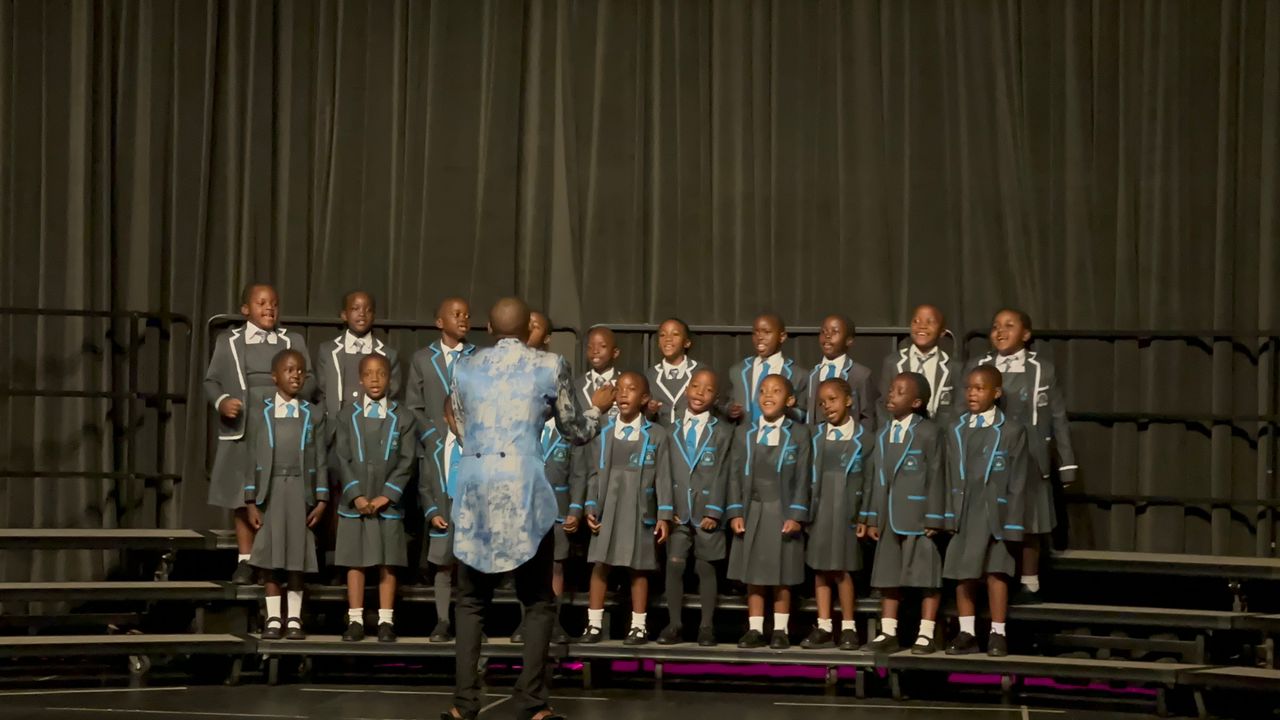
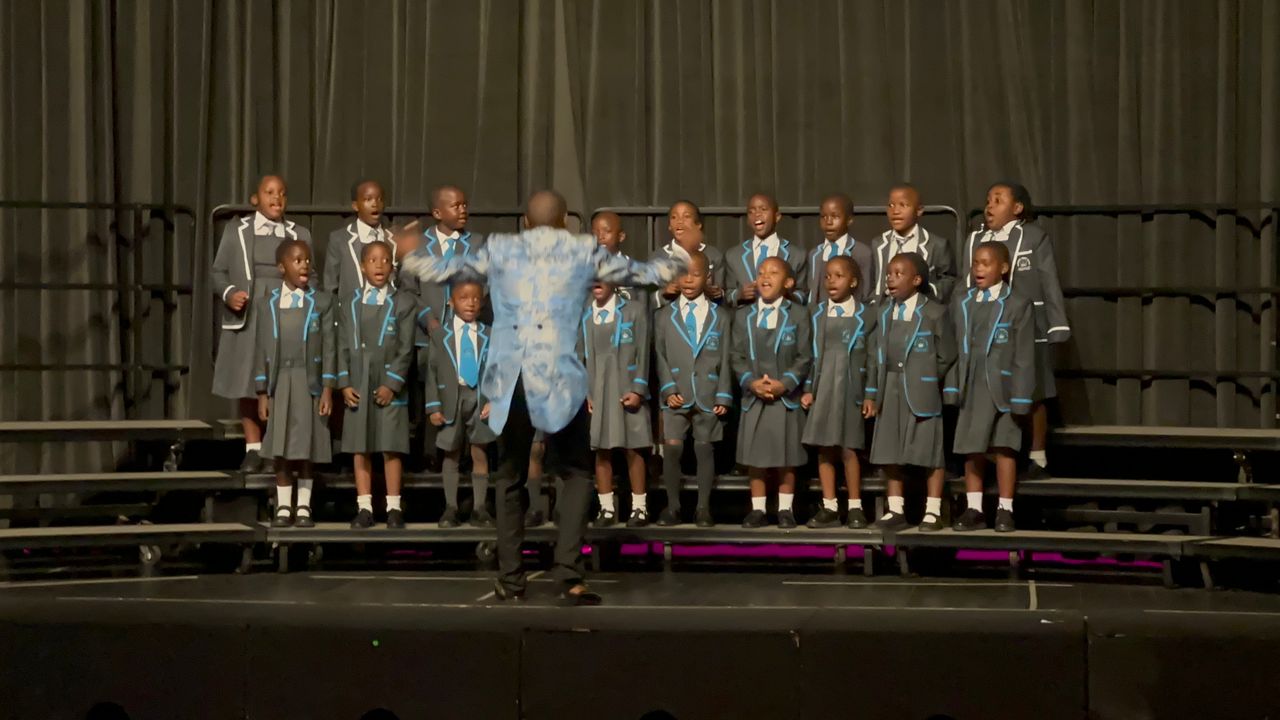
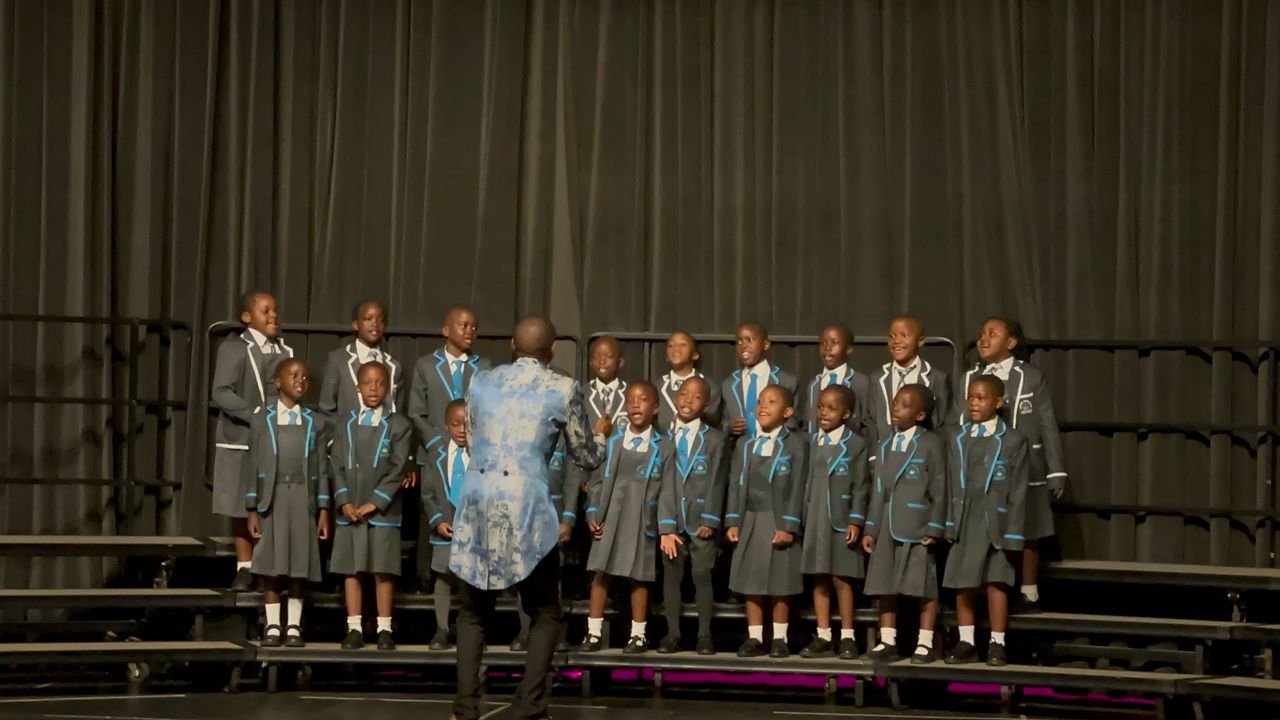
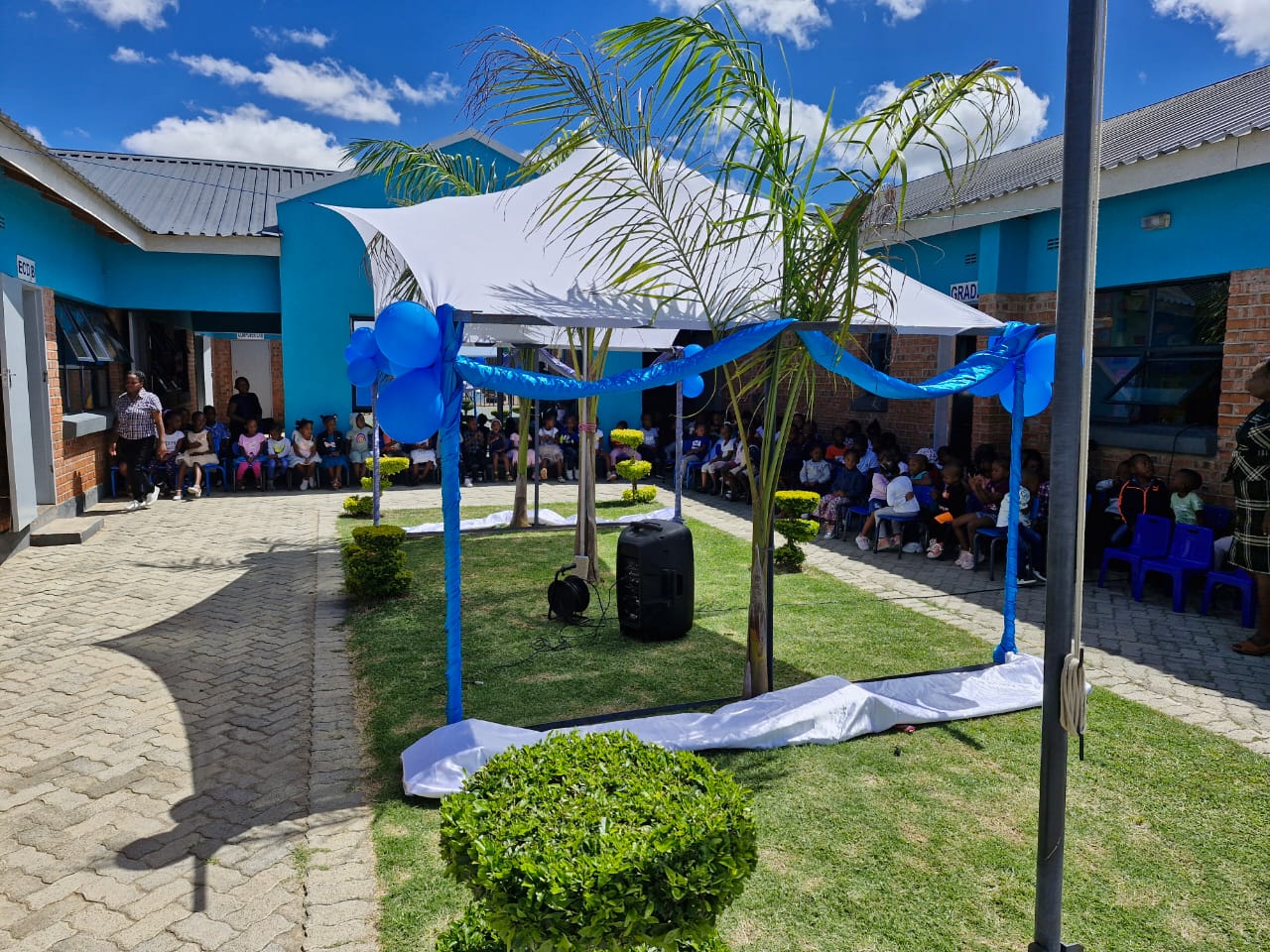
Harmony Junior School keeps a choir. The school’s invitation is to immerse yourself in the harmonious melodies of that choir. The photographs on this page are the school’s own record: children in uniform on a stage, groups gathered for performance, and an outdoor occasion on the grounds with a palm, a white canopy, and blue ribbons. Music here is something the school stands the children up to do, in front of other people, not only something that happens inside a classroom with the door shut.
The choir belongs with the rest of the school’s life beyond the desk. Harmony says that a child needs nurturing in physical and creative abilities as well as intellectual ones, and that the school takes pride in the exposure it gives. Singing in a group is that exposure in its most public form. A child learns the music. A child also learns to stand still, to come in on time, to wear what the occasion requires, and to represent the crest in front of an audience.
The crest already says what the school thinks a child is for: an open book and a ball, under the name Harmony Junior School, with the ribbon Pride in Excellence. The book is the academic day. The ball is the sports day, Tuesday and Thursday, in house colours or the golf shirt. The choir is the third presence, the voice. The motto still applies. A performance is held to the same standard as a lesson.
What the photographs show
The first photographs are wide views of the choir in grey school uniform on a dark stage. The children are arranged as a choir, not as a crowd. Uniform on a stage tells the audience that this is the school, not a costume. It also tells the children that the blazer days and the performance are the same institution. Families who have read the uniform guide will recognise the formal clothes.
A further photograph gathers more than one choir group, the kind of collage the school has used when several performances belong in one memory. The last photograph leaves the stage. It shows an outdoor event space on the school side of life: a palm, a white canopy, blue ribbons. The grounds that appear on the homepage — turquoise walls, brick, the courtyard — are the same grounds that can hold a performance when the choir is not indoors.
The school has not published a list of pieces, a rehearsal timetable, or a competition record on the website. This page does not invent them. What it can say, because the photographs and the school’s caption say it, is that the choir performs, that the children wear the school’s clothes to do it, and that families are invited to take the music seriously.
How a choir day fits the bells
An ordinary day still opens the gates at 7:00, rings the first bell at 8:00, and ends at 3:30. A performance may sit inside that day or take the children off the grounds. When the school travels, it uses its own minibuses and experienced drivers. The transport page is the right companion to this one if a concert is away from Mabvazuva. The office will say where to collect your child if 3:30 is not the end of that particular afternoon.
If your child is in the choir, treat a call from the office about dress or collection as part of the school day, not as an optional extra. The same partnership the admissions policy asks for — punctuality, and an understanding of procedures — is what makes a choir able to start on time. A missing voice is audible in a way a missing exercise book is not.
Hearing them
Come when the school invites you. The administration will say where and when. The school is at 31949, Mabvazuva, Ruwa, Harare. The phone is 077 690 8490. Write to [email protected] if you are a new family asking whether your child may join. The other reports in this section are Africa Day and Pizza Day. The programme behind them is extra curriculars.